What it is
TESSERACT is a runtime. The thing you talk to is the assistant; the runtime is what gives it memory, tools, permissions and a schedule. The distinction matters because the model is swappable and the runtime is not — you can point the assistant at a different provider tomorrow and everything around it, including everything it remembers about you, stays exactly where it was.
Three things that are unusual
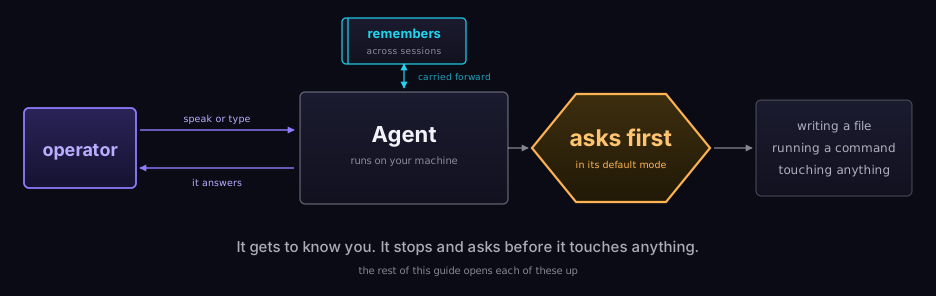
It asks before it changes anything. Not as a setting you can forget to turn on — as the posture it ships in. In that default mode, writing to a file and running a command both stop and ask. Reading is free, and so is looking something up. There is a second mode for unattended work that relaxes this, and you turn it on deliberately. See Permissions for the rest, including the things that run without asking because you set them up that way.
It remembers on purpose, not by hoarding. Memory decays and consolidates. The goal is a store that gets sharper over time rather than one that gets bigger. See Memory.
It keeps working when you are not there. On its own schedule, under the same budget and the same permission gate as when you are watching. See Autonomy.
What it is not
It is not a wrapper around one model. It is not a chat window with plugins. And it is not autonomous in the sense of unsupervised — the whole design is built around a gate that only you can open.
TESSERACT v1.1.3 — documentation built 9 Oct 2026