The agent loop
One message, end to end.
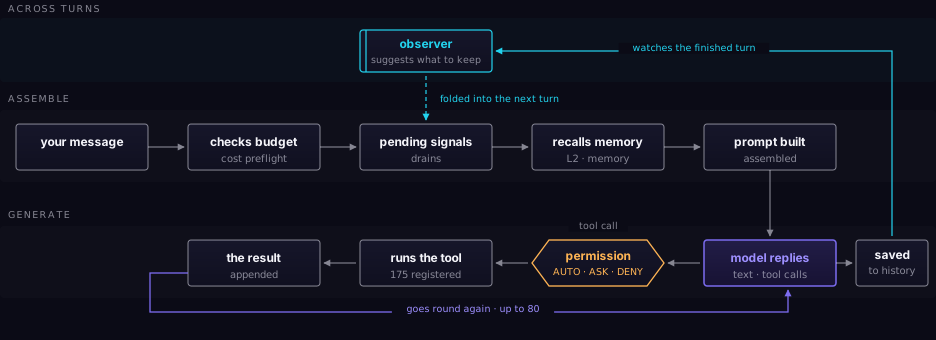
Assemble
Nothing reaches the model until three things happen. The turn is priced against the budget and refused outright if there is no headroom. Pending signals — things that finished while you were away — are folded in. And memory is recalled, which is its own four-stage pipeline; see Memory.
Only then is the prompt built.
Generate
The model replies with text, tool calls, or both. This is where the loop is.
A tool call does not end the turn. It goes through the permission gate, runs, and its result re-enters the same turn — so the model can act, look at what happened, and act again. That repeats up to a hard cap, which exists so a confused model cannot spin forever.
The gate sits inside the loop, not before it. Every call is judged on its own; approving one thing never approves the next.
Across turns
The finished turn is saved to history — that is what the next turn is built from, and what survives a reload.
The observer sits above the loop because it belongs to no single turn. It reads a turn after it finishes, decides what was worth keeping, and its suggestions are folded into the next turn’s assembly. That is why it touches both ends: it watches one turn and speaks into another.
TESSERACT v1.1.3 — documentation built 9 Oct 2026