System context
Everything that touches a turn, and which of it outlives one.
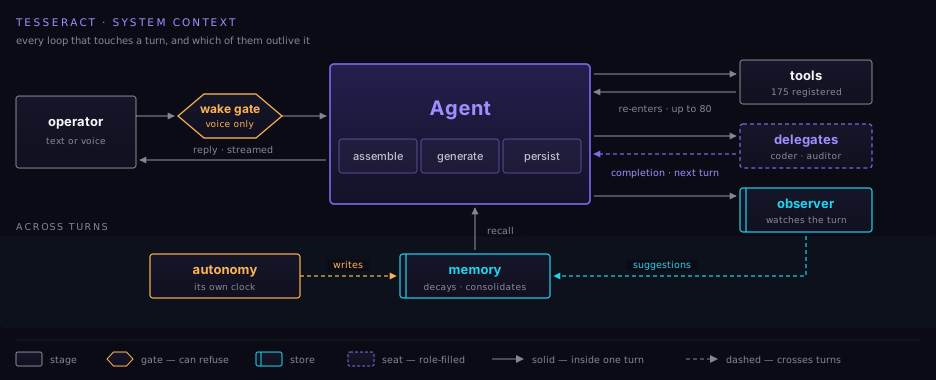
Reading the drawing
Every later diagram reuses this notation, so it is worth thirty seconds:
- a rectangle is a stage — something happens here
- a hexagon is a gate — it can refuse
- a rectangle with a doubled left edge is a store — something is kept
- a dashed rectangle is a seat — a role, filled by whatever the config names
- a solid arrow stays inside one turn; a dashed arrow crosses turns
That last distinction carries most of the surprising behaviour in the system. Anything dashed means the result arrives later, on a turn you have not sent yet.
The shape of it
One operator enters by text or by voice; voice passes a gate that can refuse it. The turn replies to the same operator — that is the loop you experience.
Around that sit three relationships, ordered by how long each takes to close:
| Loop | Returns | Drawn |
|---|---|---|
| Tools | inside the same turn | solid |
| Delegates | on a later turn | dashed |
| Observer | memory, boundary and skill suggestions, for a future turn | dashed |
Below the line is the machinery with no operator in it: autonomy runs on its own clock, and memory is the store both it and the observer write to while the turn reads from it.
TESSERACT v1.1.3 — documentation built 9 Oct 2026