Autonomy
The part with no operator in it.
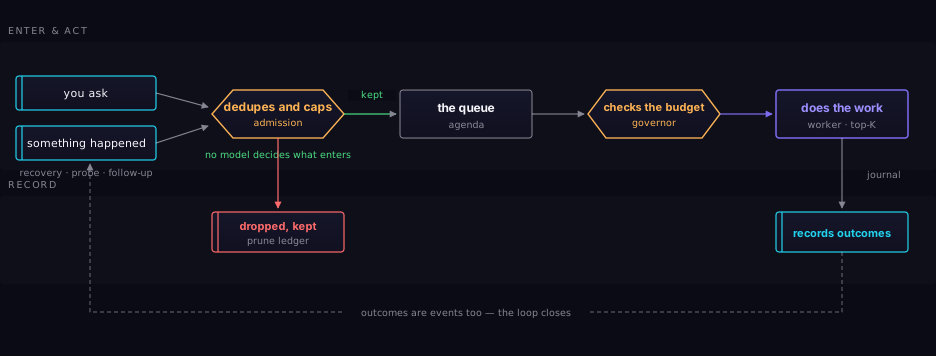
Signals become candidates
A heartbeat reads what has changed since it last looked — workspace events, memory writes, and the deliberate proposers. If nothing has changed it does not call a model at all, which is the difference between a system that idles and one that bills you for idling.
Two gates before anything is spent
This is the part worth understanding, because it is what makes unattended operation safe rather than alarming.
The vetter judges each idea before it can be acted on. It can reject a proposal outright or merge it into something already queued. Rejections are written to a ledger rather than deleted — you can go and read what it decided not to do.
The governor decides whether anything may run at all. It parks work whose source you have paused, and work whose lane has no budget headroom left.
Only what clears both gates reaches a worker.
The loop closes
Outcomes are journaled — and an outcome is itself a signal, so what autonomy did last time is part of what it notices next time.
TESSERACT v1.1.3 — documentation built 9 Oct 2026